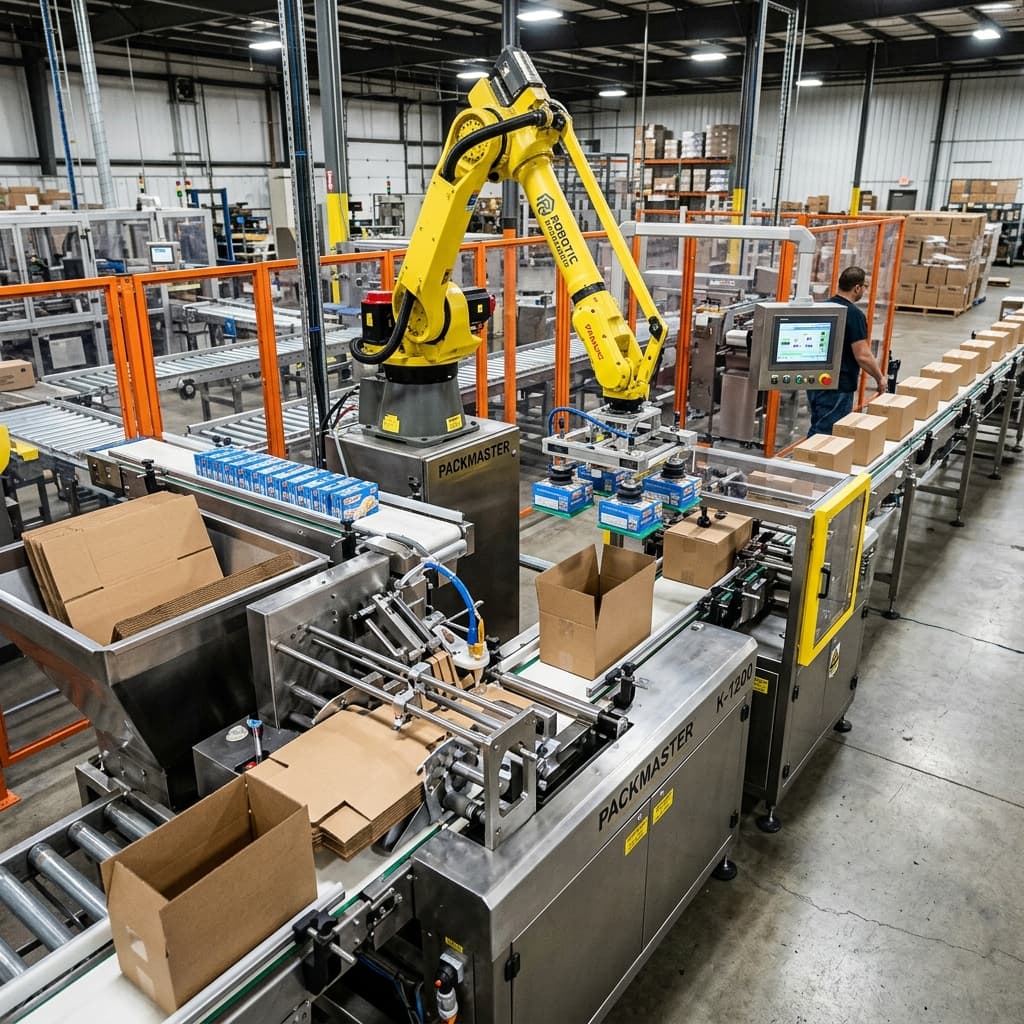
What is End-of-Line Automation?
You have packaged your products with the highest quality films, but the process doesn't end here. In modern factories, packaged products (Primary Packaging) must be placed into cardboard boxes or cases (Secondary Packaging) to be made ready for retail sale.
This process, which used to be performed manually by dozens of workers at a conveyor belt, has now been taken over by Cartoning Machines and robotic arms.
How Does a Cartoning Machine (Cartoner) Work?
A cartoning machine basically performs 4 steps automatically:
- Erecting: Flat, folded cardboard blanks are pulled from the magazine unit using vacuum suction cups and opened to form a three-dimensional box.
- Loading: Pharmaceutical blisters, biscuit packs, or cosmetic bottles are pushed into the box via a conveyor belt. (Sometimes, a leaflet/instruction manual is also automatically folded and added along with the product—Leaflet folder).
- Closing/Sealing: The flaps of the box are closed using hot-melt adhesive or a tuck-in system.
- Discharge and Coding: Lot number, Expiry Date (EXP), and QR codes are printed on the completed box via laser or inkjet before it is sent for shipment.
Horizontal and Vertical Cartoning
- Horizontal Cartoning Machines: The product is placed into the box by being pushed from the side (Pusher). These are ideal for pharmaceutical blisters, toothpaste tubes, and ready-to-eat food trays. They can reach very high speeds (300-500 boxes/minute).
- Vertical Cartoning Machines: The box stands upright, and the product is dropped in from the top. These are preferred for coffee jars, cosmetic bottles, and situations where multiple pieces are placed into the same box.
Pick & Place Robotic Arms
Delta Robots (Spider Robots) integrated into the cartoning process use camera systems (Machine Vision) to detect and pick products arriving randomly on the belt, arranging them inside the carton with incredible speed. They provide a level of precision and speed in alignment (Collation) that the human hand cannot match.
Frequently Asked Questions (FAQ)
Q: How long does it take to change the box size (Format)? A: In modern servo-motorized cartoning machines, format changeover is completed within 10-15 minutes—either automatically by selecting a recipe from the PLC screen or through tool-less adjustments by turning ball screws.
Q: Is there a risk of missing products or empty boxes? A: No. The sensors on the machine operate with "No Product - No Carton" logic. Additionally, if there is a checkweigher at the exit, any box with a missing product is instantly rejected from the line (Reject).
Eliminate the bottlenecks in your factories with Dr Mach End-of-Line solutions. Take your efficiency to the peak with our fully automatic, Industry 4.0 compatible cartoning and case packing lines.