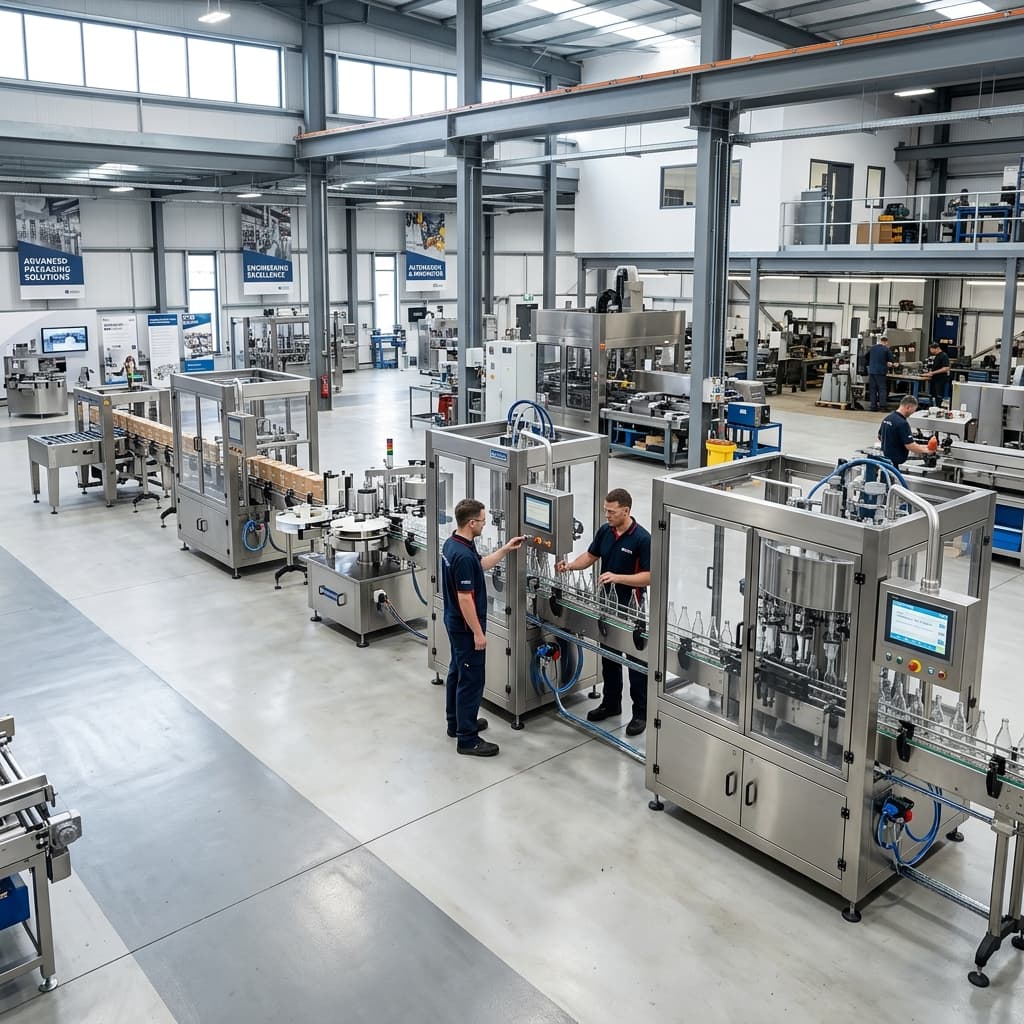
Things You Need to Know Before Investing
Investing in a filling or packaging line is the most strategic decision that determines a business's production capacity and profitability. Purchasing a machine that does not fit your needs, has insufficient capacity, or is unsuitable for your product can lead to millions of losses and a drop in prestige.
So, which criteria should you evaluate when choosing the right filling machine?
1. Product Characteristics (Viscosity and Particles)
This is the most critical factor in machine selection.
- Fluid (Water, cologne): Gravity or vacuum filling should be preferred.
- Viscous (Shampoo, ketchup): Piston or lobe pump filling should be used.
- Particulate (Sucuk dough with walnuts, fruit yogurt): Systems with wide valves and specialized pistons that do not crush the chunks within the product should be utilized.
2. Target Capacity (BPH / Bottles Per Hour)
How many bottles or packages do you want to produce per day?
- Semi-Automatic: For boutique productions between 500 - 1,000 bottles per hour.
- Fully Automatic Linear: Medium-scale productions between 2,000 - 6,000 bottles per hour.
- Rotary Systems: Designed for large industrial plants with a capacity of 10,000 - 30,000 bottles per hour, operating 24/7 without interruption.
3. Packaging Material and Geometry
Whether you are filling Plastic (PET), Glass, or Tin cans completely changes the design of the machine.
- Glass Bottles: Require special conveyors and gentle centering to prevent breakage and shaking as they move through the line.
- Asymmetric Bottles: To prevent oval or uniquely designed bottles from tipping over on the belt, they must be seated in carrier molds called "Pucks."
4. Flexibility (Changeover / Format Change Time)
If you need to fill 500 ml in the morning and 1 Liter in the afternoon on the same machine, the changeover time is crucial. In modern machines, these changes are tool-less, and thanks to servo motors, the machine adjusts itself to the new height with a single button.
Frequently Asked Questions (FAQ)
Q: What is the difference between Chinese-made machines and European/Turkish-made machines? A: Although Chinese-origin machines may seem cheap initially, they become much more expensive in the long run (TCO - Total Cost of Ownership) due to metal fatigue, lack of technical service/spare parts, and low efficiency (OEE). Local or European machines offer 15-20 years of durability and a guarantee of 24/7 support.
At Dr Mach, we project the most suitable filling lines for your product, budget, and factory floor space. Contact our engineering department for needs analysis and free feasibility studies.